
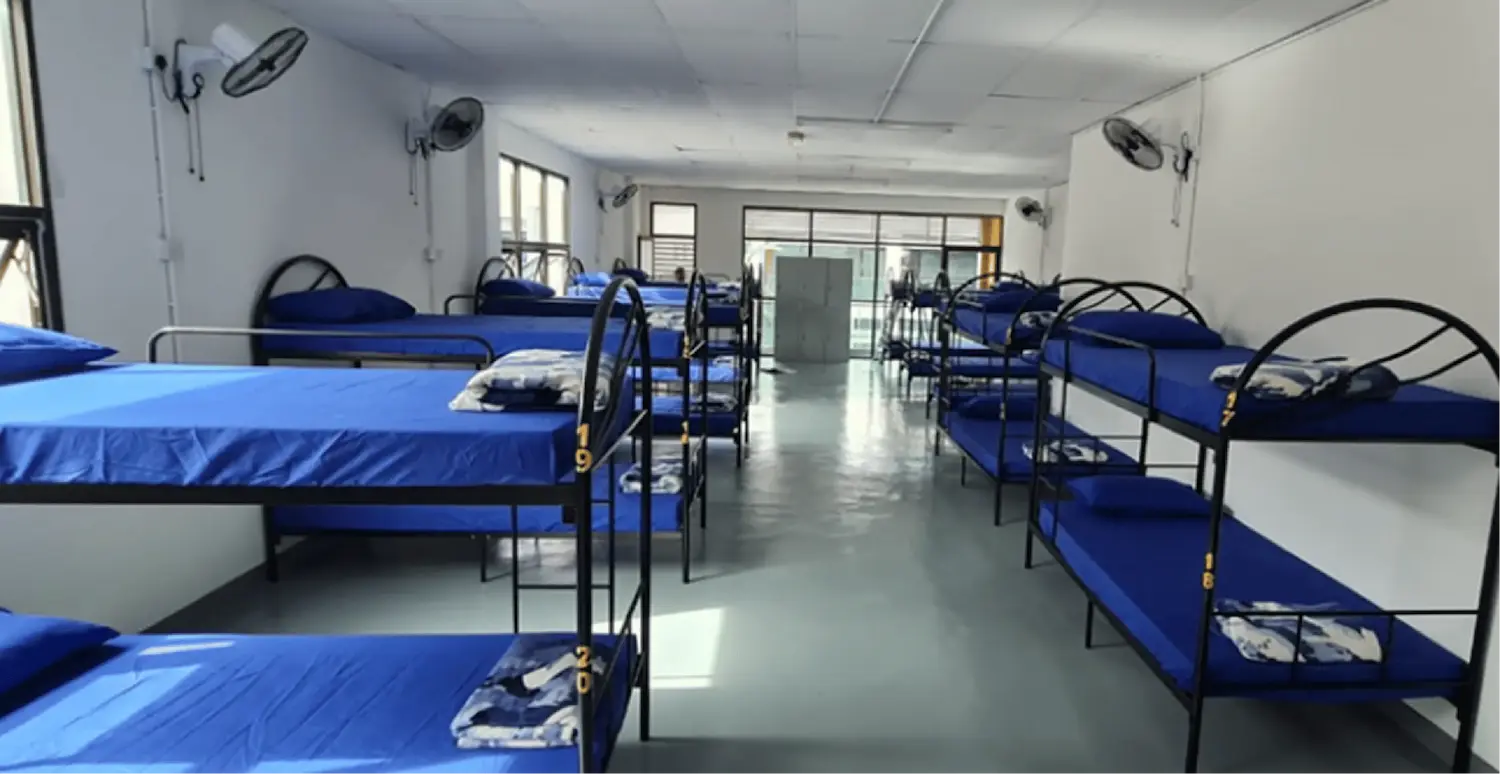
Hostels for Foreign Workers in Cameron Highlands is a long-term systems perspective on workforce stability and planning.
Cameron Highlands is a unique place in Malaysia's economy and geography. As a highland area known for farming, tourism, and logistics support, its operations depend on a workforce that is both reliable and always available. Foreign workers are still an important part of daily operations in farming, harvesting, packaging, transportation, hospitality, and maintenance services.
Cameron Highlands is a unique place to do business, unlike big industrial areas or cities. Worksites are spread out over hilly terrain, the capacity of infrastructure is limited by geography, and the timing of operations is closely linked to weather patterns and seasonal cycles. In this case, workforce planning includes more than just hiring and scheduling. It includes how workers are housed, how their daily routines are supported, and how stability is kept over time.
Hostels for foreign workers are an important part of this larger system. Hostels help keep operations going, make the workforce more predictable, and keep the balance in the region when they are planned and managed as part of a long-term plan. From a systems-based point of view, this article looks at hostels for foreign workers in Cameron Highlands. It focuses on structure, planning, and sustainability instead of short-term or isolated arrangements.
Understanding Cameron Highlands as a Workforce Environment
Cameron Highlands is known for its mix of high levels of farming and limited space. There are vegetable farms, flower-growing areas, packing facilities, cold-chain logistics operations, and tourism-related services spread out across valleys, slopes, and high plateaus. This arrangement of things has an effect on how workers are hired and managed.
The need for workers in the area is always changing. It changes depending on when crops are planted, when they are harvested, how much people want them, and when tourists come. So, workforce systems need to be flexible while still having enough structure to support daily operations. One of the most important ways to keep this balance is to build hostels for foreign workers.
In many cases, how close a person's home is to their job directly affects how productive they are, how they plan their trips, and how many workers are available. Well-planned hostels help these things work together, which lowers uncertainty and lets operations run smoothly even when there are a lot of people.
The Role of Hostels for Foreign Workers in Keeping Things Running
Hostels for foreign workers do more than just provide a place to live. In Cameron Highlands, they help with daily tasks, transportation planning, and scheduling workers by acting as organisational anchors. Employers can better plan shifts, keep track of attendance, and meet operational needs when workers live in structured environments.
From a systems point of view, hostels make things more predictable. Employees stick to their schedules, transportation can be planned better, and management can see things more clearly. This kind of predictability is very useful in an area where weather, terrain, and logistical issues can all affect operational margins.
Over time, hostels that are part of workforce planning help to lower turnover, make onboarding easier, and keep output more consistent. These benefits don't come just from the buildings themselve.
Important things to think about when planning hostels for foreign workers
To plan hostels for foreign workers in the Cameron Highlands, you need to think about both the operational needs and the limits of the area as a whole. While individual circumstances differ, several recurring factors generally influence effective planning decisions.
Some of the most important factors are:
Geographic limitations, since there isn't much suitable land and the terrain makes it hard to get to places.
The size of the workforce and changes in demand during different times of the year affect capacity needs over time.
The distance between hostels and worksites affects how people plan their transportation and their daily lives.
Infrastructure capacity, which includes utilities, access roads, and other services that help the area
These things are all very closely related. Making decisions in isolation can have effects on other parts of the system that you didn't expect. For instance, a place that looks good from a distance may be hard to get to if the infrastructure isn't big enough. A hostel that is the right size for the current workforce may not be able to handle more guests if demand rises during certain times of the year.
A systems-based planning method looks at all of these factors at once. This helps organisations make hostel arrangements that work over time, which means they don't have to change them as often and can keep running smoothly for a long time.
Hostels as a Part of a System for Managing Workers
Hostels for foreign workers work best when they are part of a larger system for managing workers. Accommodation is not an independent factor; it is interconnected with recruitment, scheduling, supervision, transportation, and documentation.
In an integrated system, hostels usually fit with:
Planning and scheduling the workforce to make sure that the number of beds available matches the number of people who need them
Transportation coordination, which makes it possible for people to move between hostels and worksites at the same time every day
Supervision and management duties, with clear lines of responsibility
Record alignment so that accommodation data shows how the workforce is actually deployed.
This alignment cuts down on fragmentation. When accommodation is planned without taking other parts of the workforce into account, gaps often happen. The number of people may not match the number of seats, the manager's duties may not be clear, or the records may not show the truth. On the other hand, integrated systems make things clearer and more consistent.
This integration will help departments work together better and make things less uncertain over time. It is easier to make management decisions and make changes without affecting daily operations.
Workforce Stability and Daily Operational Continuity
In Cameron Highlands, stability is very important because daily operations depend on timing, coordination, and having enough workers all the time. Hostels for foreign workers help keep things stable by giving them structured places to live that support routine and predictability.
Workers can rest better, stick to their schedules, and show up for work on time when their housing arrangements are stable. Because of this, attendance and performance are more consistent, which helps employers plan production and service delivery more accurately.
From a business point of view, stability at the individual level adds up to stability at the organisational level. There are fewer last-minute changes, transportation planning is more reliable, and managers can focus on making operations run more smoothly instead of always coordinating.
Stability also helps keep employees. When living arrangements are stable and fit well into daily life, it is easier for people to move in and get used to their new home. Over time, this leads to a more experienced and reliable workforce, which makes operational continuity even stronger.
Documentation, Clear Communication, and Organisational Alignment
In modern workforce systems, clear documentation is very important, especially in places like Cameron Highlands where many people may be involved in overseeing the workforce. When records accurately reflect how things are done in real life, it is easier to coordinate and day-to-day management is more predictable.
Well-run hostel systems help keep things clear by keeping accurate records of where people are staying and linking them to lists of workers, clearly and consistently assigning management duties, and setting up internal reporting structures that encourage openness. These things work together to make organisations more ready for routine operational reviews or information requests. This lowers uncertainty and lets organisations work with more confidence.
Don't think of documentation as just something that needs to be done for business. Management teams can respond more calmly and effectively to routine checks or questions when records are clear, up to date, and match what is happening on the ground. This cuts down on the need for reactive measures and keeps the focus on the core activities of the business.
Organisational alignment makes communication within the company even better. When roles, responsibilities, and records are clear, it is easier for different parts of the system to work together, which helps the system work better and stay stable over time.
Hostels as a permanent part of the infrastructure, not just a temporary solution
In many places, housing is sometimes seen as a temporary or less important issue. In Cameron Highlands, though, hostels for foreign workers work more like operational infrastructure. They help with daily tasks, make it easier for workers to work together, and make the whole system more stable.
Seeing hostels this way makes you think about the future. Infrastructure is built to last, grow, and work with other systems. In the same way, hostels that are built as infrastructure are more likely to be able to run smoothly for a long time.
This viewpoint also affects choices about where to put money. Instead of focussing on short-term convenience, organisations think about how accommodation systems will work as the needs of the workforce change. This method helps long-term growth and cuts down on problems over time.
Long-Term Workforce Planning and Governance Maturity
In Cameron Highlands, workforce governance has been moving more and more towards long-term planning and system maturity. Companies that go beyond short-term plans and use integrated frameworks often have more stable operations.
There are a few things that make up governance maturity. It means that everyone knows what their roles and responsibilities are, that processes are consistent, and that planning and execution are in sync. When they are part of mature governance systems, hostels for foreign workers help these things by giving stable reference points for managing the workforce.
Organisations can change their capacity, schedules, and logistics without affecting their daily operations when they use mature systems. Changes can be made gradually, with the help of clear records and well-established procedures. Governance works as an enabler instead of a limit in this way.
As workforce systems get better, hostels go from being quick fixes to built-in parts. They become a key part of how the organisation works, making sure things stay the same even when things change.
WorkConnect's System-Based Way of Running Hostels for Foreign Workers
WorkConnect sees hostels for foreign workers in Cameron Highlands as part of a larger workforce system, not as separate places. The main points are structure, integration, and long-term use.
This method starts with figuring out how big the workforce is, how it works, and how fast it is growing. To make sure that things stay the same, hostel capacity and management frameworks are then adjusted to fit these factors. Hostels can stay useful as the needs of the organisation change if everyone knows their roles, keeps their records organised, and can easily integrate with daily operations.
Structured approaches help make things more predictable in a complex regional environment by focussing on systems instead of separate arrangements. This predictability helps businesses plan with more confidence and stay stable over time.
Balance in the community and long-term health of the region
Cameron Highlands is a place where people live and work. Workforce systems are therefore linked to how communities work and how long-term sustainability is in a region. When planned carefully, hostels for foreign workers help with balanced development by cutting down on last-minute plans and making activity patterns more predictable.
Predictability is good for everyone involved. Operations go more smoothly, infrastructure is used more effectively, and interactions between worksites and the areas around them become easier to handle. Over time, this balance helps the region stay alive as both a place to live and a place to do business.
By including housing in larger planning frameworks, organisations help keep the region stable while also meeting their own operational needs.
The Future of Hostels for Foreign Workers in Cameron Highlands
As Cameron Highlands changes, workforce systems will have a bigger and bigger impact on how it grows. Hostels for foreign workers will continue to be an important part of these systems. They will help industries that need a steady supply of workers and help keep the region stable.
Future planning will probably focus on integration, scalability, and making things clear. People will start to see hostels as more than just places to stay; they will see them as parts of bigger systems that help keep the workforce going and make operations more resilient.
Organisations that plan hostels with the long term in mind will be better able to deal with change and keep things stable in a changing environment.
Conclusion: Structure and planning lead to stability
In Cameron Highlands, hostels for foreign workers are more than just places to sleep. When planned and managed as part of integrated workforce systems, they become the building blocks of stability, predictability, and long-term operational success.
Because of the area's unique geography and economic role, strategies that put structure, alignment, and foresight first are needed. Short-term fixes might help with immediate needs, but systems that work well over time are what make long-term stability possible.
By seeing hostels as important parts of workforce planning, businesses can keep things running smoothly in a complicated and changing environment.