
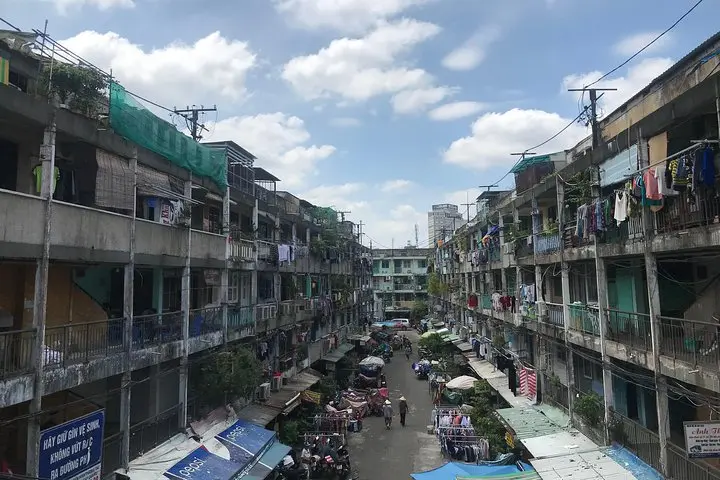
When housing becomes infrastructure, this is the introduction.
For decades, Malaysia's industrial growth was accompanied by foreign worker hostels. Factories grew, plantations grew, and construction projects grew. Foreign workers became the backbone of these industries. But strategic meetings and long-term planning didn't often talk about housing for workers.
In a lot of businesses, housing for workers was seen as a necessary part of running the business, not as a structural part of it. Speed and cost, not sustainability or compliance, were what drove decisions. That time is coming to an end.
Workers' hostels are no longer just places for workers to sleep. They are becoming more and more important as critical infrastructure that affects the stability of the workforce, compliance with regulations, the reputation of the company, and the long-term resilience of operations. To understand the issues with foreign worker hostels, you need more than just a regulatory lens. It requires a broad look at how work, housing, city planning, business management, and social norms all affect each other.
This article looks at the bigger problems that workers' hostels in Malaysia are facing and why businesses need to rethink how they provide housing for their employees.
1. Malaysia's reliance on foreign workers: the structural context
Foreign workers hostel are a big part of Malaysia's economy.Foreign workers are very important for keeping productivity and competitiveness in manufacturing, construction, agriculture, logistics, and services.
As industries grew, the need for foreign workers grew faster than the building of formal housing infrastructure. Employers had to find quick fixes, like renting apartments, turning shoplots into homes, using temporary housing, or relying on third-party landlords. These temporary fixes became the norm over time.
The outcome is a broken ecosystem of worker housing, where standards are very different and it's not always clear who is responsible. This splitting up is the cause of many of the problems we see today. Worker hostels did not develop as part of a coordinated strategy at the national or industry level. Instead, they came about as quick fixes for immediate labour needs.
2. Too many people: The visible sign of a bigger problem
Overcrowding is the most obvious problem in hostels for foreign workers, but it is also the one that people get wrong the most. When many workers share small rooms, few amenities, and poorly ventilated areas, the issue is often blamed on the employer's carelessness. This may be true at times, but overcrowding is more accurately seen as a systemic result of competing pressures, such as controlling costs, quickly growing the workforce, a lack of housing, and gaps in regulations.
Overcrowded hostels make it more likely that people will get sick, lose their privacy, and lose their dignity. Workers who live in these kinds of conditions are more likely to get sick, stressed, and unhappy. From a business point of view, too many people is not just a moral issue. It has a direct effect on productivity, safety, and the ability to keep things running smoothly. A workforce that lives in unstable conditions is less reliable by nature.
The COVID-19 pandemic was a turning point. Worker dormitory outbreaks caused factories to close, supply chains to break down, and policy changes at the national level. Housing for workers was no longer hidden; it became a national issue. Too many people in one place showed a simple truth: when accommodation systems break down, business systems break down too.
3. The Change in Rules: Act 446 and the New Compliance Reality
Malaysia's Act 446 changed the basic rules for employers about how to provide housing for workers. In the past, worker housing was in a grey area, with little oversight and standards that weren't always the same. Act 446 made the law clearer by setting minimum standards for safety, living conditions, and facilities.
This change has big effects. Compliance is no longer just a one-time task; it is now an ongoing duty. Employers must not only provide housing, but they must also make sure that it meets certain standards, is inspected, and stays compliant over time.
A lot of businesses didn't realise how hard this change would be. What seemed like a simple task—providing beds and rooms—has turned into a regulated system that needs paperwork, communication with the authorities, and constant monitoring.
There is a big difference between what some employers do now and what the law says they should do. To close this gap, we need to spend money, plan, and make changes to the way things are set up. Act 446 is more than just a legal requirement. It stands for a bigger change in how society thinks about worker welfare.
4. Centralised Labour Quarters: Pros and Cons
Centralised Labour Quarters were created to fix the problems with scattered worker housing. In theory, CLQs provide a more organised, controlled, and scalable way to house foreign workers. But things are more complicated in real life.
There aren't many CLQs, and they aren't always evenly spread out across the country. For a lot of employers, available CLQs are far away from where they work, which makes transportation more expensive and more difficult. Also, the cost of renting may be too high for smaller businesses.
Authorities push for centralisation and formalisation on one hand. The infrastructure needed to make this change, on the other hand, is not yet fully in place. Because of this, many employers are stuck between informal housing and formal solutions that don't work.
The CLQ challenge brings up an important point: policy alone can't fix the problem of housing for workers. It needs coordinated investments, planning, and new models that fit with how businesses work.
5. Governance and Visibility: The Risk of Fragmentation That Isn't Obvious
One of the most overlooked issues with worker accommodation is the lack of visibility and governance.
In a lot of companies, different departments or outside companies are in charge of providing housing for workers. HR departments are in charge of hiring and paying employees, operations teams are in charge of making things, and landlords are in charge of managing physical properties. This breaking up makes it hard to see.
Employers often can't see in real time what is happening with their employees without centralised data and oversight:
Levels of occupancy,
Status of compliance,
Conditions of living,
Problems with maintenance,
Risks from regulations.
Problems stay hidden until they turn into crises, like inspections, accidents, complaints, or public scandals. So, worker accommodation is not just a physical problem; it is also a problem with information and governance.
In today's businesses, important systems are digitised and kept an eye on. Still, worker housing, which is an important part of keeping the workforce stable, is often not managed or documented.
6. Urbanisation and Social Dynamics
As Malaysia becomes more urban, the spatial relationship between worker housing and local communities gets more complicated. Hostels for foreign workers are often close to industrial areas or in neighbourhoods. This closeness helps operations run smoothly, but it also worries local residents about safety, stress on infrastructure, and social integration.
How people see things has a big effect on how policies are made. Local governments have made rules stricter and limited where workers can live in some areas because of complaints from communities. Employers have had to rethink their location strategies and housing models because of this change.
Housing for workers is no longer just a business issue; it is now a problem for society as a whole that is part of city planning and community relations.
7. How WorkConnect Changes the Way Workers Are Accommodated from Unorganised Housing to Structured Systems
Employers are not to blame for the problems with foreign worker hostels in Malaysia. They come from a bigger problem: there aren't any organised systems in place to handle large-scale workforce housing.
Most businesses still use a lot of different methods, like having multiple landlords, making informal agreements, tracking things by hand, and not having processes that work together. These methods may work for a while, but they don't have visibility, accountability, or the ability to grow over time. This is where a system-based approach becomes essential.
WorkConnect was made to deal with worker housing not as a separate problem, but as part of a larger system for managing a workforce. WorkConnect doesn't see hostels as separate physical spaces. Instead, it connects accommodation, compliance, workforce data, and operational planning into one system.
WorkConnect helps employers keep better track of worker housing, make sure they are following the rules, and make sure that the number of available beds matches the number of workers they need. This makes things less uncertain and turns worker housing from a problem that needs to be fixed into a system that can be managed.
More importantly, WorkConnect helps businesses change the way they think. People no longer see worker housing as a cost-driven need. Instead, they see it as strategic infrastructure that helps keep the workforce stable, follow the rules, and grow in a way that lasts.
Companies that use structured platforms like WorkConnect are better able to handle risk, stay open, and build strong workforce ecosystems in a world where rules are getting stricter and ESG standards are getting higher.
8. The Human Capital Perspective: Housing as a Driver of Productivity
Traditional management sees housing for workers as a cost centre. But this point of view doesn't take into account how living conditions affect how well people work. People who work in safe, stable, and respectful places are more likely to:
Always do a good job
Stay loyal to your employer
Fit in better with the culture of the organisation
Keep your body and mind healthy
On the other hand, unstable housing conditions lead to tiredness, stress, and a lack of interest.
From a strategic point of view, housing for workers should be seen as an investment in people. The quality of housing directly affects the quality of work. In industries with low profit margins and high competition, having a stable workforce can give you a big edge over your competitors.
9. The Economic Reality: Costs, Risks, and Long-Term Trade-Offs
When it comes to managing worker housing, employers often have to make tough choices. Informal housing may seem like a good way to save money in the short term. But these savings are often cancelled out by long-term risks:
Fines from the government
Problems with operations
Damage to your reputation
More people leaving
Less work gets done
Financial statements don't always show the true cost of bad housing. It shows up as inefficiencies and weaknesses that aren't obvious. Structured accommodation systems, on the other hand, need an initial investment but provide stability over time. This conflict between cost and control is what makes it hard for employers to find housing for their workers.
10. Rethinking the Role of Systems and Technology
Digital systems are used by modern businesses to handle HR, finance, logistics, and customer service. However, worker accommodation frequently exists beyond this digital ecosystem.This gap is a chance that was missed. Companies can do the following by putting worker housing into structured systems:
Seeing things in real time
Tracking compliance
Planning for the workforce
Managing risk
Making decisions based on data
Managing worker accommodation should be just as strict as managing other important business systems.
11. The Strategic Imperative: Moving from Unplanned Solutions to Organised Models
The main problem for employers is not that there aren't enough places to live, but that there aren't enough structured models. Ad-hoc solutions may meet immediate needs, but they are not very stable. As businesses get bigger, fragility turns into risk.
Structured accommodation models offer a new way of looking at things. They make sure that housing is in line with long-term business strategy, compliance needs, and workforce planning. In this model, housing for workers is not an afterthought; it is a key part of how an organisation is set up.
12. The Future of Workers' Hostels in Malaysia
There will be many factors that shape the future of worker housing in Malaysia.Regulatory frameworks will keep getting stricter. Expectations for ESG will grow. There will be more limits in cities. It will be harder for workers to move around. Companies that keep using informal housing models in this environment will face more and more risks.
People who use structured, clear, and scalable housing systems will become stronger. Housing for workers will be seen more and more as a type of infrastructure, like power grids, logistics networks, or digital platforms.
Conclusion: From Compliance to Structure
The situation in Malaysia's workers' hostels has reached a critical point. They are no longer just operational concerns on the side, but strategic parts that affect workforce stability, compliance with regulations, and the long-term strength of the business.
Companies can no longer rely on makeshift or broken housing arrangements as rules get stricter, ESG expectations rise, and the way people work together gets more complicated. Not only do we need better facilities, but we also need structured systems that make worker housing more visible, controllable, and accountable.
This is where platforms like WorkConnect can really make a difference.
WorkConnect helps companies move beyond short-term compliance to long-term, system-driven workforce planning by redefining worker housing as part of an integrated workforce management ecosystem. Employers can better manage risk, improve compliance, and build strong labour infrastructures when they have structured accommodation management and operational visibility.
In the end, improvisation does not lead to stability. It comes from having a structure. WorkConnect gives organisations a way to manage foreign workers and housing in a more organised way. It also helps them grow and stay stable over time. Visit WorkConnect to find out more.